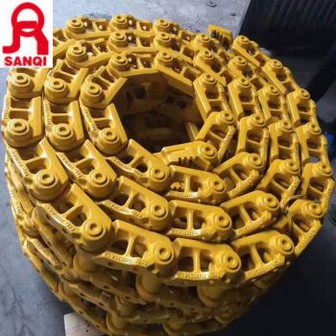
What is the expected lifespan of a non-OEM bulldozer track roller?
What is the Expected Lifespan of a Non-OEM Bulldozer Track Roller?
Bulldozers are among the most important machines used in various construction and demolition projects. They provide efficient means of moving heavy materials and flattening surfaces, among others. The track roller is one of the essential components of a bulldozer, which supports the weight of the machine and passes it to the ground. It thus plays a critical role in ensuring the efficient operation and longevity of the machine. However, like any other mechanical part, bulldozer track rollers wear out over time, reducing their effectiveness and lifespan. One of the most commonly asked questions regarding bulldozer track rollers is their expected lifespan, especially for non-OEM parts.
To begin with, an OEM (original equipment manufacturer) bulldozer track roller refers to a part made by the manufacturer of the bulldozer. These parts are designed to meet the specific requirements and standards of the equipment, ensuring optimal performance and lifespan. On the other hand, non-OEM track rollers are manufactured by third parties and may not meet the same standards as OEM parts.
The lifespan of a bulldozer track roller depends on various factors. One of the most critical factors is the quality of the part. OEM parts are generally more durable and longer-lasting than non-OEM parts. With proper maintenance, an OEM bulldozer track roller can last up to 3,000 hours or more before replacement is necessary. However, the lifespan of a non-OEM track roller is highly dependent on the manufacturer's quality and the operating conditions. Some may wear out within a few hundred hours, while others may last up to 2,000 hours or more.
Other factors that affect the lifespan of a bulldozer track roller include the type of terrain, the weight of the machine, the speed of operation, and the frequency and quality of maintenance. Rough and rocky terrain can cause premature wear and tear of the track roller, reducing its lifespan. Similarly, operating the machine at high speeds or carrying excessively heavy loads can overwork the roller, causing premature failure. Proper maintenance, including regular lubrication and inspection, can prolong the lifespan of the track roller.
In conclusion, the expected lifespan of a non-OEM bulldozer track roller depends on several factors and can vary significantly. While OEM parts are generally recommended for optimal performance and longevity, some non-OEM parts can provide similar levels of performance and durability with proper sourcing and quality control. It is thus crucial to consider the quality of the part, operating conditions, and maintenance practices when assessing the expected lifespan of a bulldozer track roller. With the right approach, contractors can maximize the lifespan and efficiency of their equipment, reducing downtime and operating costs.