What are the cause analysis and preventive measures of bolt looseness in excavator?
What are the cause analysis and preventive measures of bolt looseness in excavator?
The working condition of excavator is bad and the vibration is very big. The bolts in the working device, pin shaft, baffle, supporting wheel and body accessories are easy to loosen. Therefore, it is clearly required in the operation manual of each main engine factory that the bolts at certain key positions should be inspected and tightened every certain period (such as 250h). However, this method cannot prevent the loosening of bolts, and the bolts in many key parts have been loosened before the tightening cycle of inspection, which poses a big safety hazard. The causes of bolt looseness are various and need to be controlled from all aspects at the same time. Based on the typical cases of bolt looseness in excavator, this paper discusses the causes of bolt looseness from the aspects of stiffness, vibration, screw loose preventing structure, preloading force and material, and puts forward the preventive measures.
1, the stiffness
The stiffness mentioned in this paper includes bolt (fastener) stiffness and frame (fastener) stiffness.
(1) bolt stiffness
When the bolt is subjected to axial load, the smaller the stress variation amplitude is, the less the probability of fatigue fracture of the bolt and the higher the reliability of the connection is. When the working tension is constant, the stress variation amplitude can be reduced by reducing the bolt stiffness.
When the stiffness of connecting parts and bolts is the same, the working tension can be increased by increasing the preloading force, which can also reduce the stress variation amplitude.
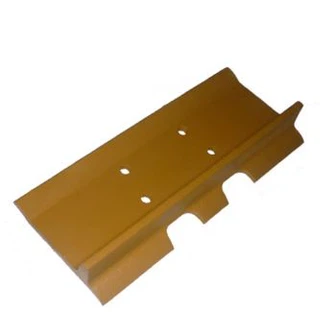
Moderately increasing bolt length can reduce bolt stiffness. For example, long bolts can be used in the places of rotary bearing, counterweight, crawler guard plate, bridge protective net, etc., so as to reduce the bolt stiffness.
(2) frame stiffness
The stiffness of frame (fastener) can be improved by eliminating gasket and using gasket with higher stiffness. If the travel pilot valve is connected with the travel pedal assembly, the transition block can be directly bolted down.
The smaller the frame stiffness, the vibration from the excitation source (engine) to the surrounding process, the vibration is more easily amplified, the greater the stress amplitude. On the contrary, the higher the stiffness of the frame, the better the stability of the machine, and the smaller the amplitude of stress variation under the same conditions.
When the whole machine of a small excavator is upgraded from grade 5 and 5t to grade 7t, the engine, cab and frame all adopt grade 5 and 5t, and its vibration isolation effect becomes worse, the vibration of the whole machine increases, and the bolt looseness becomes worse. By unilaterally adjusting the shock absorber, the effect is not obvious. After strengthening the frame, the problem was solved.
2, vibration
In order to satisfy the self-locking condition of the thread pair, the lifting Angle of the thread is less than the equivalent friction Angle of the thread pair. After the bolt is tightened, friction between the bolt head and the supporting surface of the nut will also prevent loosening. However, when the bolt is mounted on the machine with variable loads such as vibration and impact, the friction between the screw pairs may decrease or disappear instantly. Vibration, the impact of repeated reciprocating action, will cause bolt loosening. Excavator vibration includes the vibration generated by the engine and the vibration generated by the excavator operation.
(1) vibration generated by the engine
The vibration transmitted from the engine to the whole engine is related to the layout of the engine suspension system and the type of shock absorber. For example, a 47t class excavator is equipped with cummins QSM11 engine. The original design of the engine USES 3 points of support, namely 1 support is set at the fan end and 2 support is set at the flywheel end. In the 2000h excavation test, the bolt looseness was serious. After adjusting the axial stiffness of the shock absorber, the axial acceleration and amplitude were improved, but the lateral shock swing occurred, causing the fan shield to be knocked off for many times.
To this end, 3 point support of the engine is changed to 4 point support. In other words, a connecting plate is set at the fan end, which is connected with the engine's own support, and both ends are connected with the frame through shock absorbers. After the improvement, the test was conducted. According to the test data, the vibration isolation rate of the fan end was nearly doubled compared with that of the 3 point support, and the vibration isolation rate of the flywheel end was also slightly increased.
The vibration isolation rate is also affected by the rubber hardness of engine shock absorber, the thickness of frame plate and tightening torque. In general, the natural vibration frequency can be reduced by reducing the axial stiffness of the shock absorber to get better isolation effect. However, excessive reduction of shock absorber axial stiffness, engine impact, shock absorber and frame between the gap between the plate, shock absorber will be damaged by friction; At the same time, it will affect the radial stiffness of the shock absorber, causing the engine to swing.
(2) vibration generated by operation
The vibration generated by excavator operation is related to the hydraulic system matching and the stability of the whole machine, and is also affected by the driver's operating habits. The influence of hydraulic system is mainly divided into two aspects: the instantaneous vibration of hydraulic system when opening and closing, and the impact vibration of the whole machine caused by poor coordination.
The hydraulic system can cause vibration of the whole machine at the moment of opening and closing. The vibration can be reduced from two aspects: high pressure oil circuit and pilot oil circuit. A one-way throttle valve is installed in the high pressure oil circuit of the movable arm and the bucket rod to throttle the return oil circuit of the bucket rod retraction and the movable arm descending. By increasing oil return back pressure, the pump load is increased and the pump displacement is reduced to achieve the purpose of speed reduction. This method is mainly used in special working devices such as extended arm of excavator.
Adding a buffer valve in the pilot oil line can reduce the vibration of the excavator caused by the driver when he makes an emergency stop, but does not have a buffer effect during normal operation. Therefore, the addition of buffer valve can improve the driver's operating comfort, and will not reduce the work efficiency. If considering the cost, consider using baffle pilot one-way throttle valve. However, this kind of throttle valve is greatly affected by the viscosity of hydraulic oil.
Impact vibration of hydraulic system if the coordination of excavator hydraulic system is not good, it will bring impact vibration to the excavator. Improve the coordination of excavator, mainly from the main valve core specification, priority valve throttle hole size and number, solenoid valve and other aspects.
The impact vibration of hydraulic system of excavator is also related to the stability of the whole structure. Need to check the weight of the excavator weight quality, center of gravity, etc. In addition, the bolt of the pin and baffle of the working device, the pipe clamp bolt of the hydraulic system of the working device, the bolt of the supporting wheel and the loose bolt of the rotary support are all related to the impact vibration of the hydraulic system.
3, thread control structure
The commonly used methods of preventing looseness of screw joint are: friction preventing looseness, mechanical preventing looseness and destroying screw pair preventing looseness. Generally speaking, friction prevention is simple and convenient, but not reliable enough. The thread connection of important parts, especially the thread connection inside excavator which is not easy to check, should adopt the mechanical anti-loosening method.
(1) friction control
Friction anti - loosening including double nuts and tighten, spring pad, self - locking nuts and other methods. The method of double nuts tightening and preventing looseness is simple in structure and suitable for stationary connection such as stable, low speed and heavy load. It can be used for fixing pin shaft of excavator working device, fixing u-bolt, etc. Due to the uneven spring force of the spring pad, the bolt is easy to bend, and the bent bolt is easy to loosen under the impact and vibration. In the early stage, bolts of M8, M10 and M12 were used in a certain type of excavator, all of which were spring cushion and flat cushion anti-loosening structure. The anti-loosening effect was poor, and a lot of bolts loosened when the whole machine worked for less than 500h. After the change to self - made gasket to increase the effect of better pine prevention. Increase the gasket surface should be smooth, there is no harmful crack, scratch, burr and bending, to avoid the bolt bending stress during assembly.
Self-locking nut is more reliable, after several disassembly, will not reduce the anti-loosening performance. This method can be used for U - shaped handle, radio antenna, light and other smaller size thread pairs.
(2) mechanical loosening control
Mechanical loosening is commonly used for engine shock absorber bolts. The nut is welded on a bending bracket and the bending edge limit of the bracket is used to prevent looseness.
(3) destroy the thread vice control loose
Before the screw thread pair is screwed, thread fastening adhesive is applied on the thread, which belongs to the destruction of the screw thread pair. After applying thread fastening adhesive on thread and tightening thread pair, thread glue will harden and solidify to prevent thread pair from loosening. Screw fastening adhesive is used for bolts of important parts, such as supporting weight wheel, sprocket wheel, engine support, engine shock absorber, cab bottom frame, cab shock absorber, counterweight, rotary motor, traveling motor, rotary bearing bolts.
4. Pre-tightening force
(1) the bonding surface shall meet the requirements
The precision of threaded hole is usually 6H class, the size of the pretightening force and the effect of fastening are affected by the friction coefficient of the fastener and the fastener. Damage or corrosion of the thread, before fastening should be the first tap or die dressing (commonly known as "return"), and then with cleaning agent will screw hole inside, bolt surface and binding surface residual paint and stains clean.
(2) the preloading force should be appropriate
Increasing the preloading force can reduce the stress variation. But the pre-tightening force should not be too large, must be controlled in the prescribed scope. This is because too much preloading will cause bolt strength to reach the yield point. When the torque wrench is used to tighten the bolt, the stress (pre-tightening force) of the bolt is generally 75% of the yield strength of the bolt. For bolts of class 10 and 9, the tensile strength is 1000MPa and the yield strength is 900MPa, so the pretension force is 675MPa. When torque wrench is used, the theoretical tightening torque T has the following relationship with the preloading force F:
T material 0, 2 fd
Where, d is the nominal diameter of the thread.
In addition, the tightening torque is related to the precision of the fastening tool.
When using socket wrench, ordinary wrench, the tightening torque should be slightly smaller than when using torque wrench.
(3) disposal after fastening
After fastening the bolt as required, color marking shall be applied to the bolt head (or nut) and the surface of the fastener. Once the bolt loosens, tighten it gradually in the direction of tightening until the head (or nut) of the bolt coincides with the mark on the surface of the fastener again.
5, the material
(1) by fastener
When the bolt is screwed into the fastener, the fastener material is different, the depth of the fastener is different, according to the fastener is steel, cast iron, light alloy arrangement order, the depth of the bolt should be gradually increased. The depth of the bolt should be slightly greater than the nominal diameter of the thread, but when the nominal diameter of the bolt is less than 12mm, and the occasions for the screw are battery terminal, pipe clamp, wire clip, radiator dust net, bottom sealing plate, the screw depth can be equal to the nominal diameter. The graphite formed in the matrix of cast iron can expand, reduce the shrinkage of casting volume, reduce the internal stress, and weaken the transmission of vibration. For example, the transition block, engine bracket and compressor bracket on the pilot valve are made of cast iron.
(2) thread seat
Screw seat material selection is particularly important. When the yield strength of the screw seat is too small, it may cause deformation of the bolt after screwing, leading to early fatigue failure and easy loosening of the bolt. The yield strength of some materials is related to the plate thickness, such as Q235 steel, the thicker the plate thickness, the smaller the yield strength, the selection of materials should be paid attention to. If the tensile strength of the thread seat is too small, when the torque wrench is used to tighten, it will directly damage the thread. Therefore, the key position of the screw seat steel generally selected Q345B, the common position of the screw seat steel generally selected Q235B.
(3) homemade gasket
The larger gasket used in tightening bolts is not a standard part and has strict technical requirements, so we can only make our own. The self-made gasket is generally made of no. 45 steel with the hardness of HRC39. The heat treatment mode is quenching and tempering at medium temperature. If the self-made gasket is not hard enough after heat treatment, it may cause deformation. When the hardness of self-made gasket reaches HRC38 and above, electrogalvanizing shall be dried at low temperature (200℃) for 6 hours to prevent hydrogen embrittlement, and then slowly cooled in furnace. After the comprehensive application of the above measures in the whole machine design and assembly process, the user reported that the bolt loosening problem of the whole machine was significantly reduced, and good results and economic benefits were obtained.
This answer is recommended by the questioner